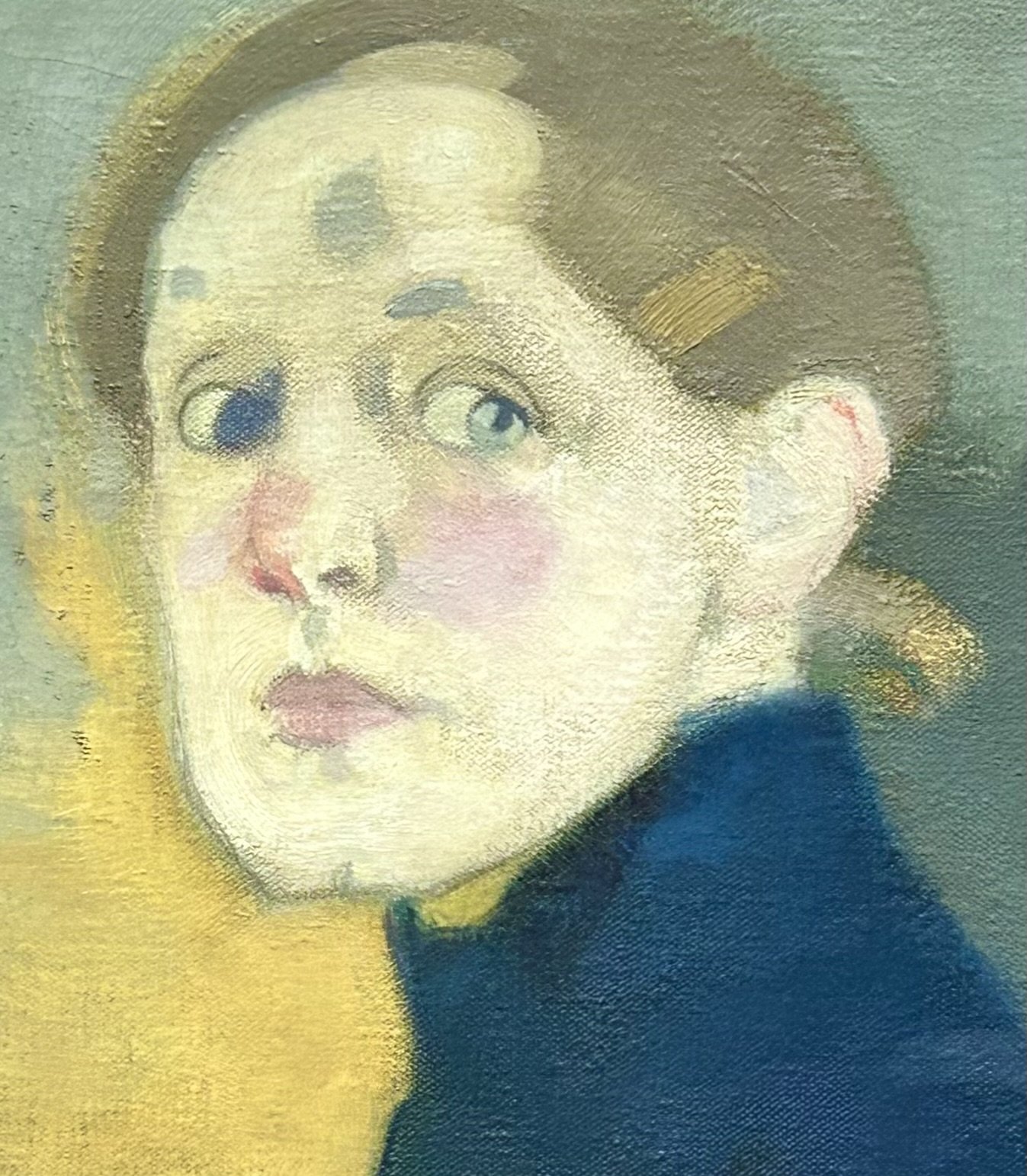
Sgraffito is an Italian word for “scratching off.” It is an artistic technique that has been used since time immemorial - from cave art to the present day. It is a reductive act, one in which you selectively expose underlying layers of color or substrate by scraping and distressing what’s on top. It has been used in ceramics, fresco painting, scratchboard drawing, even the folk art of scrimshaw. It’s nothing new. But, a recent viewing of a wonderful retrospective at The Met brought it to my attention and has made me think on it ever since, both as a technique and as a metaphor.
The show is “Seeing Silence - The Art of Helene Schjerfbeck” (pronounced roughly in English as “Shall-beck.”) It is running until April 5, 2026 and is well worth a trip to the city. Schjerbeck was a Finnish modernist painter who was active from the 1880’s until her death in 1946. Given my affinity for Scandinavian artists (Edvard Munch, Nína Tryggvadóttir and Louisa Mattiasdottir, to name a few), I am embarrassed to admit that she was previously unknown to me, so learning about her work was a pleasant surprise.
As I moved through the gallery, viewing the progression from her Parisian-trained Realist beginnings into a deepening Expressionism, I was taken by her fervent distressing of the surface upon which she worked - sgraffito. Each painting bore scrapes, furrows and scars, made by either palette knife, stick or even sandpaper, revealing underpainting, drawing and, very obviously, the weave of the canvas on which it was made. The results are stunning, with a visual subtlety that is poetic in its simplicity.
At the same time, her subject matter turned within as well (hence the metaphor.) While the earlier work is primarily narrative, her later paintings are mostly quiet domestic tableaus, along with an astonishing series of self-portraits that are visceral, humble and completely honest. Especially the very last pieces she made in the mid-40’s, as she aged and her body was beginning to fail. They are among the most intense, profound and personal self-portraits I have ever experienced. Just as she was reducing her method of making marks, so she also was distilling her SELF, and putting it out on canvas. Brave.

Helene Schjerfbeck - Self Portrait - Light & Shadow (Green Self Portrait), 1945
So, sgraffito. Does every artist move into periods in which they look within and search for what is underneath? Is it an inevitable task, either consciously or otherwise, to attempt a mining of what lies within?
My Collection - Severin (Sig) Haines
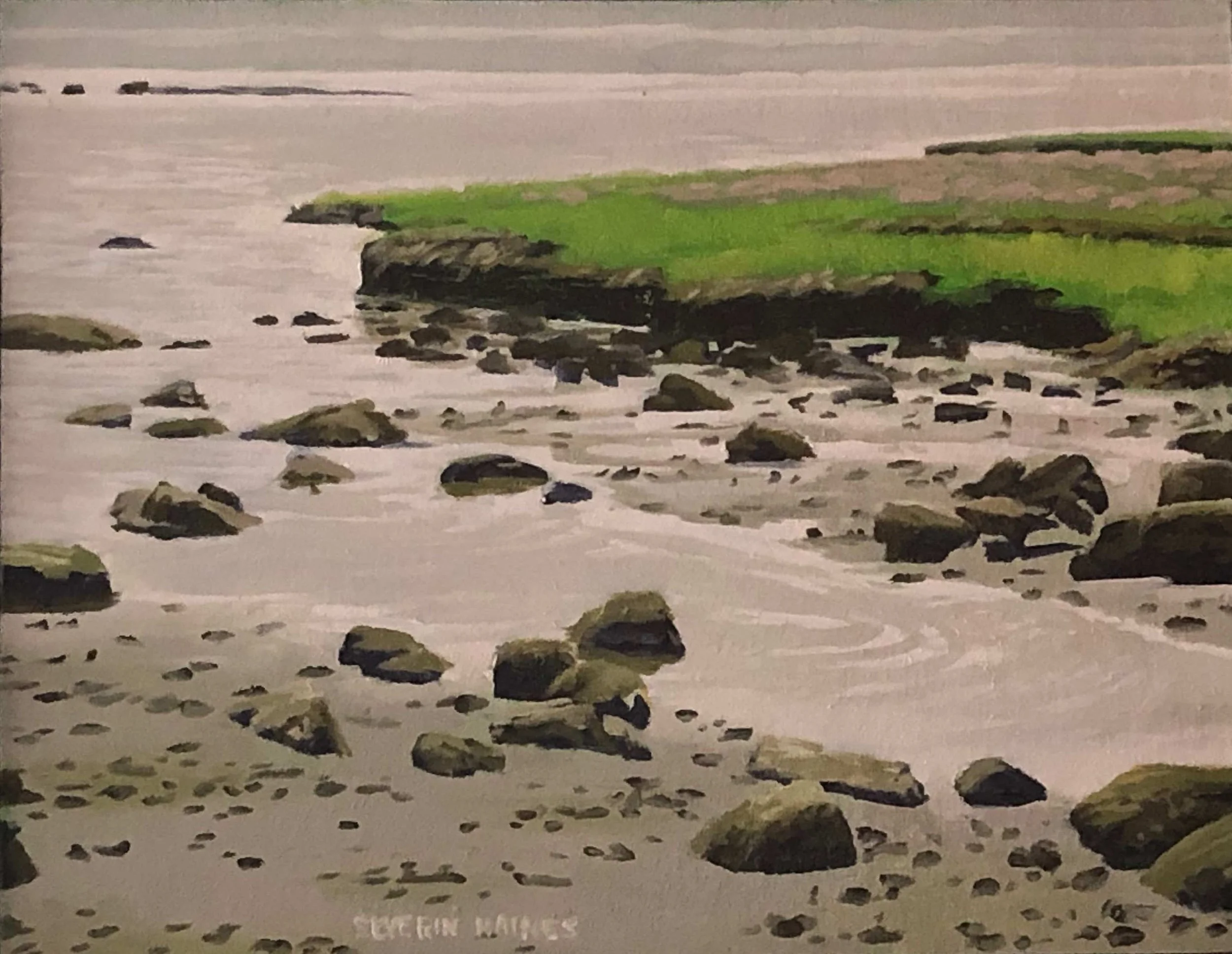
Severin Haines - Saltmarsh, 1982
The painting above is one I purchased for my late wife as a Christmas present. It is by a former teacher of mine, Severin (Sig) Haines, a man who became an influential force in my life far after our time at Swain. In fact, I never had him as a direct teacher there. After I declared as a Painting major, the department head, David Loeffler Smith, assigned me, purposely, AWAY from Sig. When I pressed him as to why, he told me that, given that Sig and I shared a Scandinavian heritage, I would benefit from a different perspective. Not sure about that logic, but it all worked out (I was assigned to Ben Martinez, who continues to be my maestro to this day.) In 2002, when I began to paint more purposefully after a career in Graphic Design, Sig and I reconnected and some of my fondest memories of that time in my life are visits to his studio to view his marvelous landscapes.
My wife was particularly drawn to his quiet and still depictions of the SouthCoast shore, places we walked many steps among the Piping Plovers, seeking solace, sea glass and lucky stones. Sig died shortly after my wife in 2023, both of them victims of early onset dementia. I’m happy to have this reminder of their spirit hanging on my wall. It’s peaceful motif softens the loss by offering a gentle and natural reminder of what they held dear in this world.